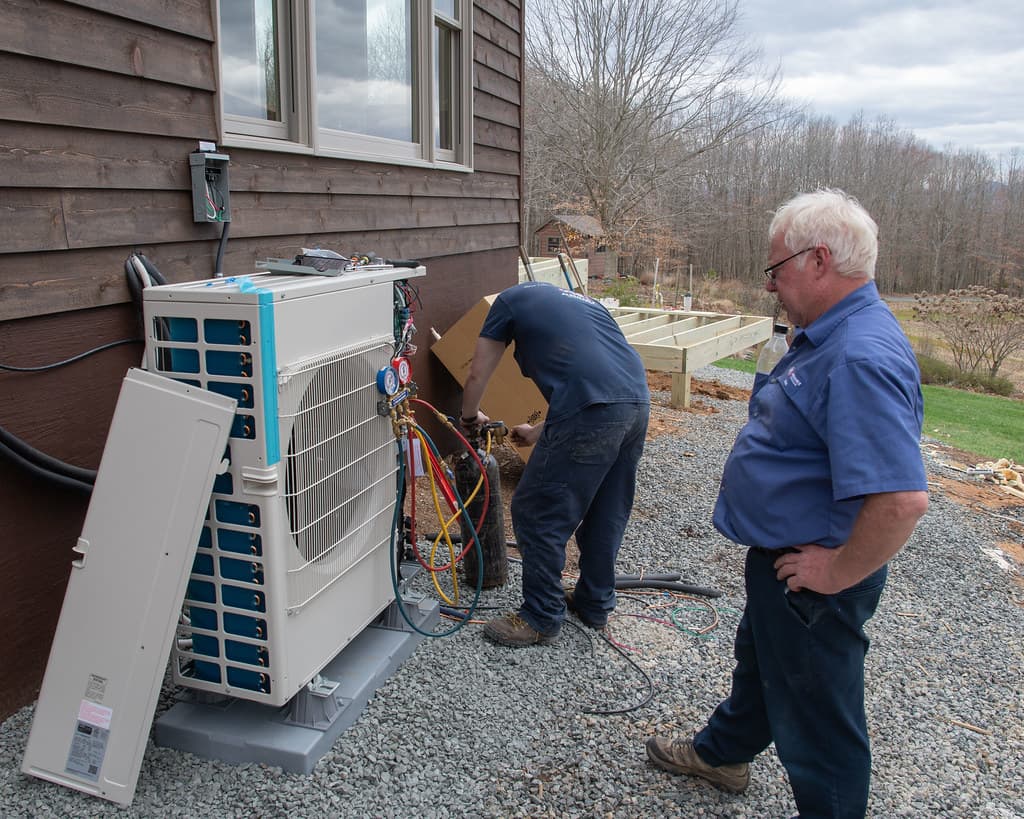
The neighborhood, the home, the system we designed, and what it fixed. If one of these sounds like your house, the quote conversation will be short.
Westerleigh, Staten Island · 1930s detached colonial
4-zone Mitsubishi hyper-heat multi-split — one head on the open first floor, three bedroom heads upstairs; gas boiler kept as cold-snap backup
The problem: Three window units every May, radiators with no cooling at all, and a second floor that never dropped below 80°F on July nights.
What changed: Window units retired for good, each bedroom on its own thermostat, and the boiler now fires only on the coldest nights. Line sets run down the rear wall in painted line-hide — nothing visible from the street.
Midland Beach, Staten Island · flood-zone cape cod with a finished attic
Single-zone 12,000 BTU cold-climate mini-split; condenser on an elevated bracket above flood grade, coastal-coated coil and stainless hardware
The problem: A finished attic office no duct had ever reached — unusable after noon from June to September, and a block where salt air and the 2012 flood line rule the equipment choices.
What changed: The attic now holds its own temperature year-round, the condenser sits above the flood line on a wall bracket, and the coastal spec means the coil isn't on an eight-year corrosion clock.
Bay Ridge, Brooklyn · brick rowhouse
2-zone Mitsubishi multi-split for the top floor — two bedroom heads fed from a rear-yard condenser, line sets chased down the rear facade
The problem: A top floor under a flat black roof running 12–15 degrees hotter than the parlor level, in a house with plaster walls nobody wanted opened.
What changed: Both top-floor bedrooms hold their set temperature through heat waves. All penetrations came through the rear brick — no plaster was cut, and the street-facing facade is untouched.
Hudson Heights, Manhattan · pre-war co-op apartment
Single-zone ductless system with board-approved placement; condensate pumped to an approved drain line rather than dripped to the setback
The problem: Radiator heat with no cooling, a co-op board with a real alteration agreement, and a building engineer with opinions about where condensate goes.
What changed: We prepared the alteration package and insurance certificates the board required, placed the equipment per the building's rules, and the apartment got quiet cooling without a window unit blocking the fire escape.